
Most racket reviews online are written from a spec sheet. Ours start in a sports hall. Since 2014, every racket on Badminton Racket Review has been strung, measured and played on court by the same person, so that every racket can be compared fairly with the next. Here is what happens behind the scenes when we review a racket.
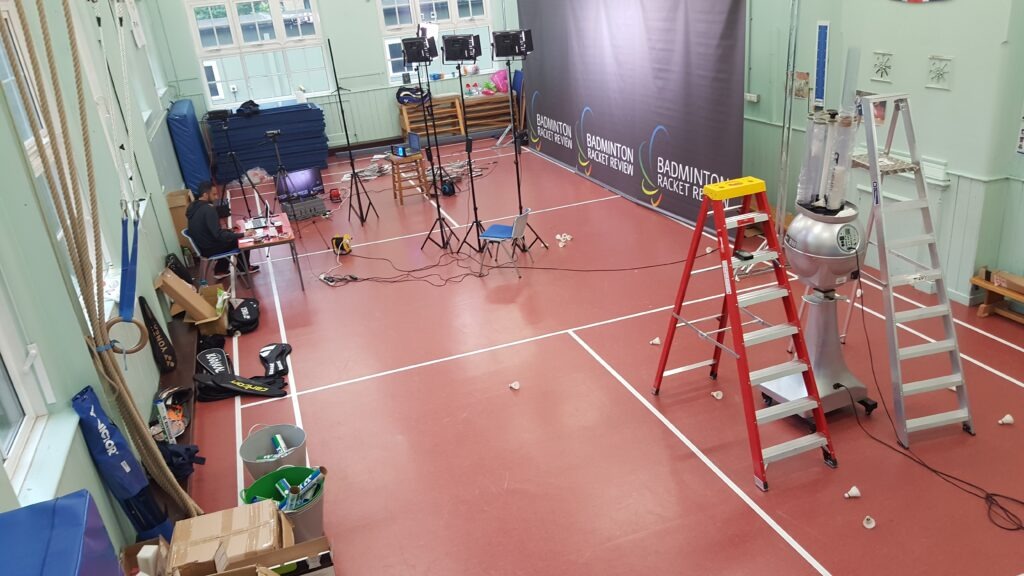
Step 1: Every racket starts from the same point
Rackets arrive with different factory strings at different tensions. If we tested them like that, we would be measuring the strings as much as the frame. So before testing, every racket is restrung with Yonex BG65 at 25 lbs. With the same string at the same tension, any difference in our results comes from the racket itself.
We also use the same shuttle for every test: the Yonex AS30. Shuttle speed and quality affect how fast a smash travels, so keeping the shuttle the same matters as much as the strings.
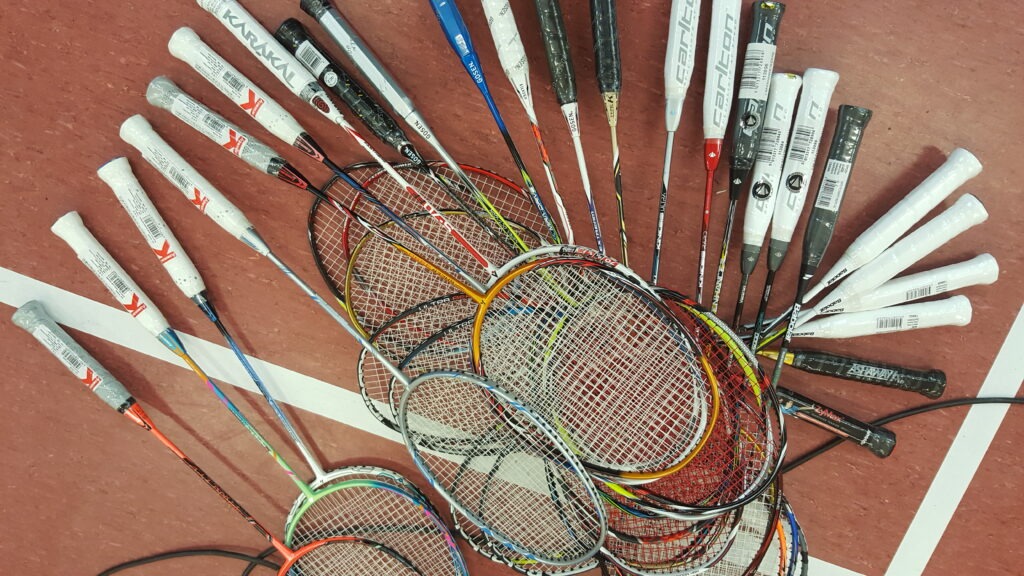
Step 2: Measure it before we swing it
Before a single shuttle is hit, each racket goes through the same set of measurements:
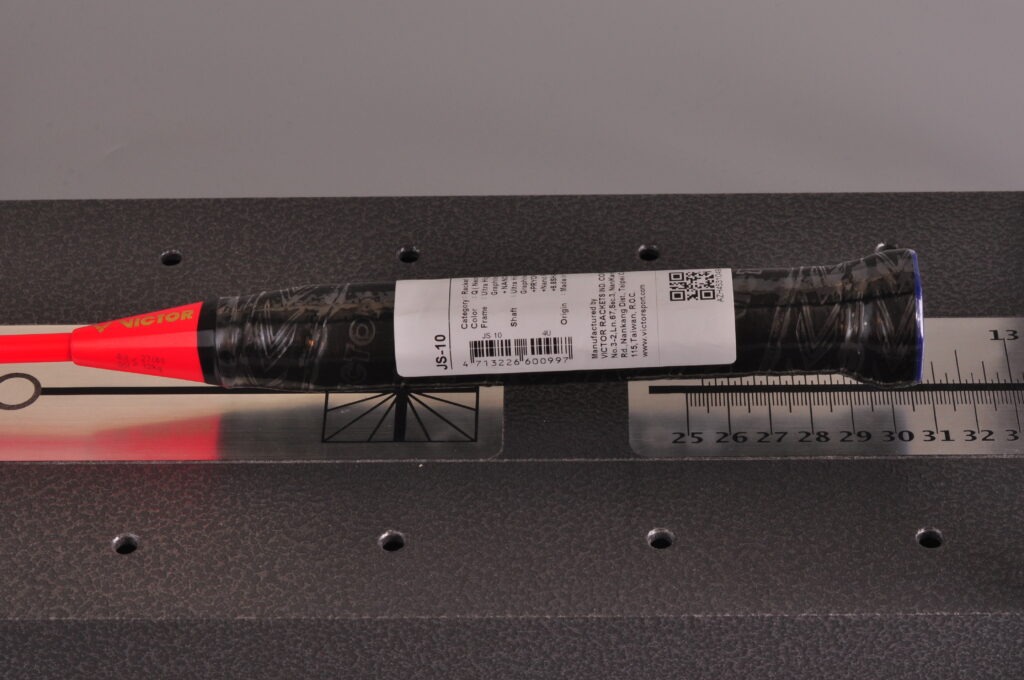
- True weight. We weigh the strung racket to 0.1 g. Labels such as 3U and 4U cover a range of weights, so two 4U rackets can feel quite different.
- Balance point. Where the weight sits along the frame decides whether a racket feels head-heavy, even or head-light.
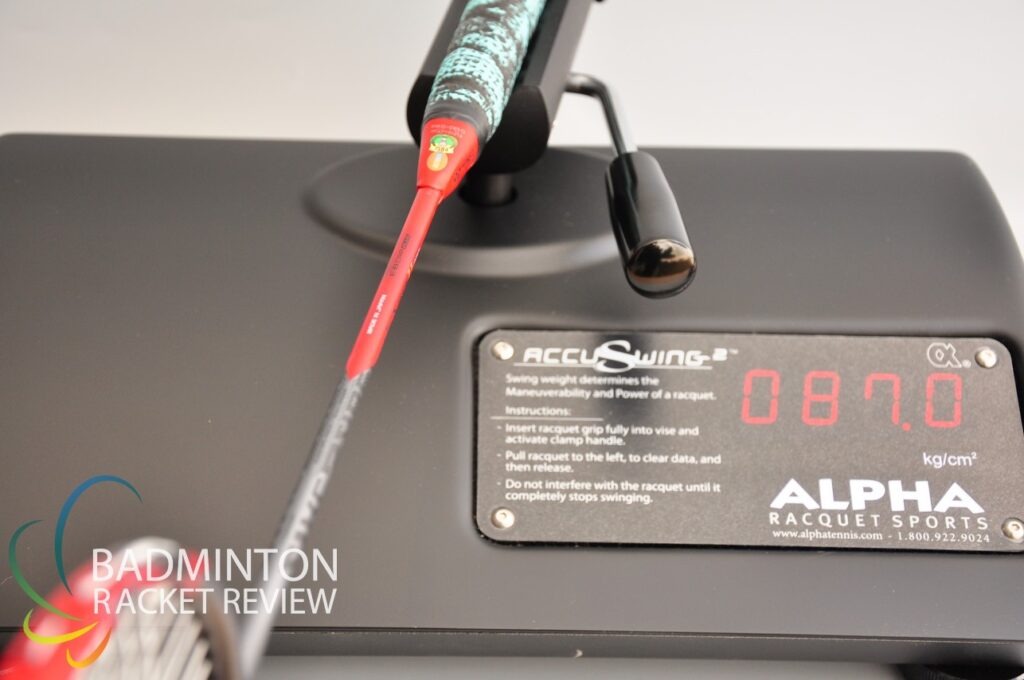
- Swing weight. Measured on an Accuswing 2 machine. This tells you how heavy the racket feels when you swing it, which often matters more than its weight on a scale.
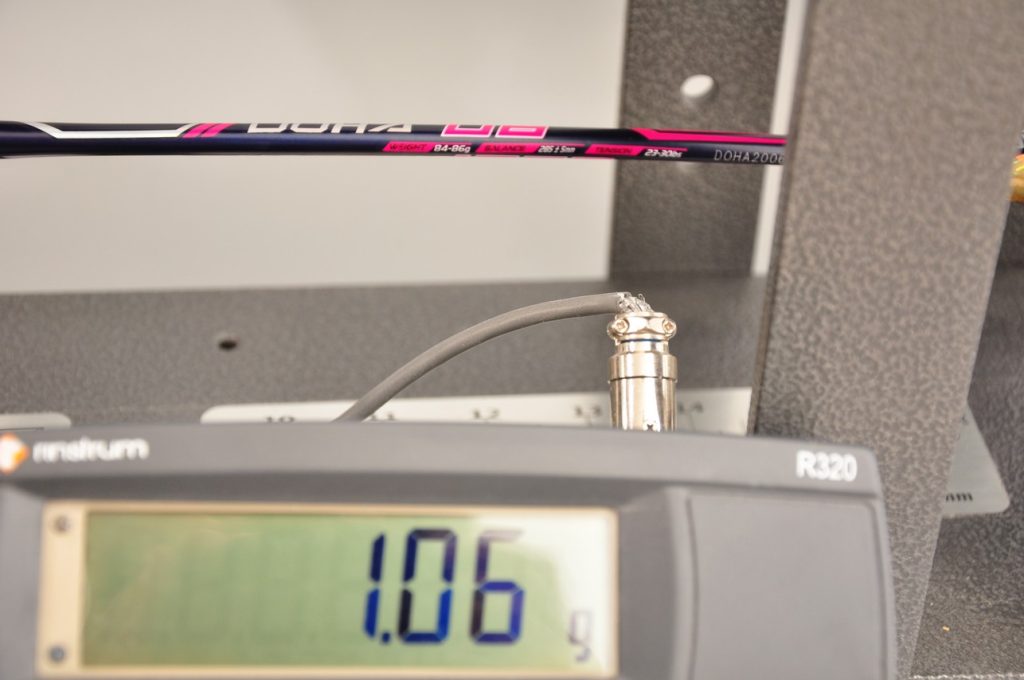
- Shaft stiffness. We measure how far the shaft bends under a fixed load. Stiff shafts reward fast, technical swings, while flexible shafts make it easier to generate power.
Step 3: Real smashes, measured on court
Measurements on the bench only tell half the story, so every racket is then played on court. We film smashes with a high-speed camera and calculate how fast the shuttle leaves the racket. Because the same player hits every smash with the same strings and shuttles, smash speeds can be compared from one review to the next.
Step 4: Why one player tests everything
If ten different people tested ten rackets, you would learn more about the players than about the rackets. Using one tester for every review is what makes our results fair to compare, and it is why we have kept the same method for more than 800 rackets.
Step 5: No sponsorship, only facts
Our promise has never changed: no sponsorship, no endorsements, only facts. If a racket measures badly or feels poor on court, the review says so. That independence is the whole point of the site.
How to use our results
- To know how heavy a racket will feel, compare swing weight rather than the 3U or 4U label.
- Use the balance point to choose between attacking, head-heavy frames and fast, head-light frames for defence.
- Match shaft stiffness to your level: most club players get on better with a medium or flexible shaft.
- Use smash speed to compare the power of different rackets, not as a promise of what you will hit.
Ready to find your racket? Browse our 800+ lab-tested racket reviews, or see who is top of the world rankings this week.
Leave a Reply
You must be logged in to post a comment.