
3U, 4U, 5U: the code on a badminton racket tells you its weight class. It is useful, but it is also widely misunderstood. Here is what the codes mean, why two rackets with the same code can feel different, and how to choose the right weight.
What do 2U, 3U, 4U and 5U mean?
Yonex and many other brands use the U system. Each class covers a 5 g range of unstrung frame weight:
- 2U: 90 to 94.9 g
- 3U: 85 to 89.9 g
- 4U: 80 to 84.9 g
- 5U: 75 to 79.9 g
The lower the number, the heavier the racket. Strings and the grip add weight, so a strung racket is always heavier than its class suggests.
Why the label is not the whole story
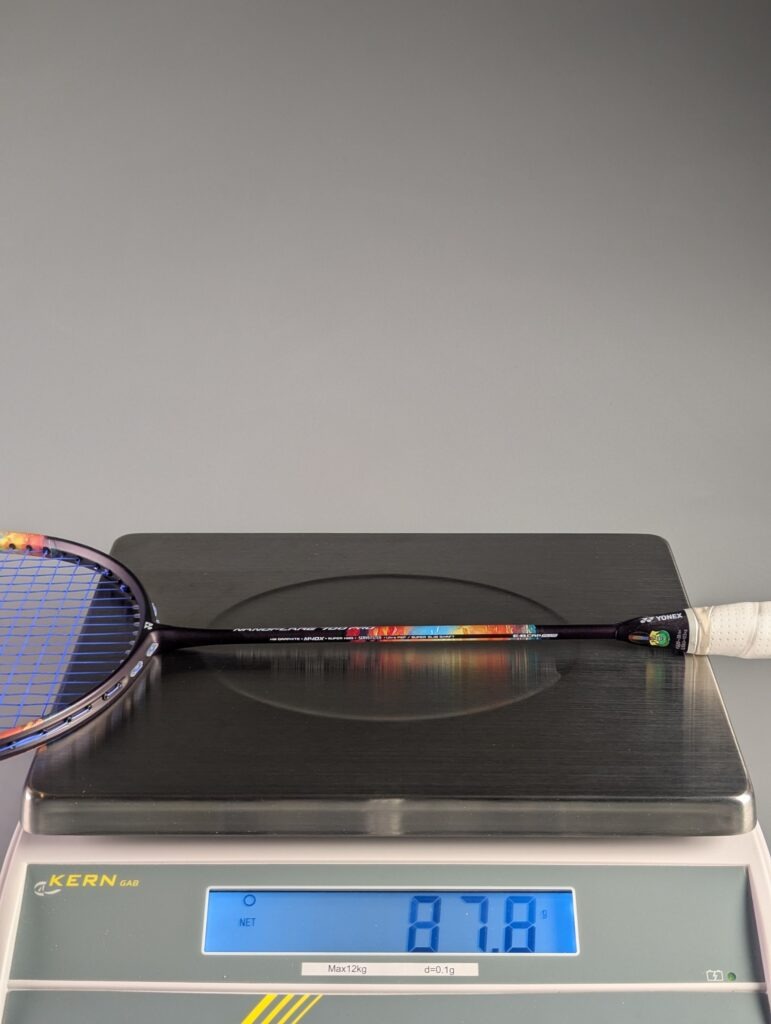
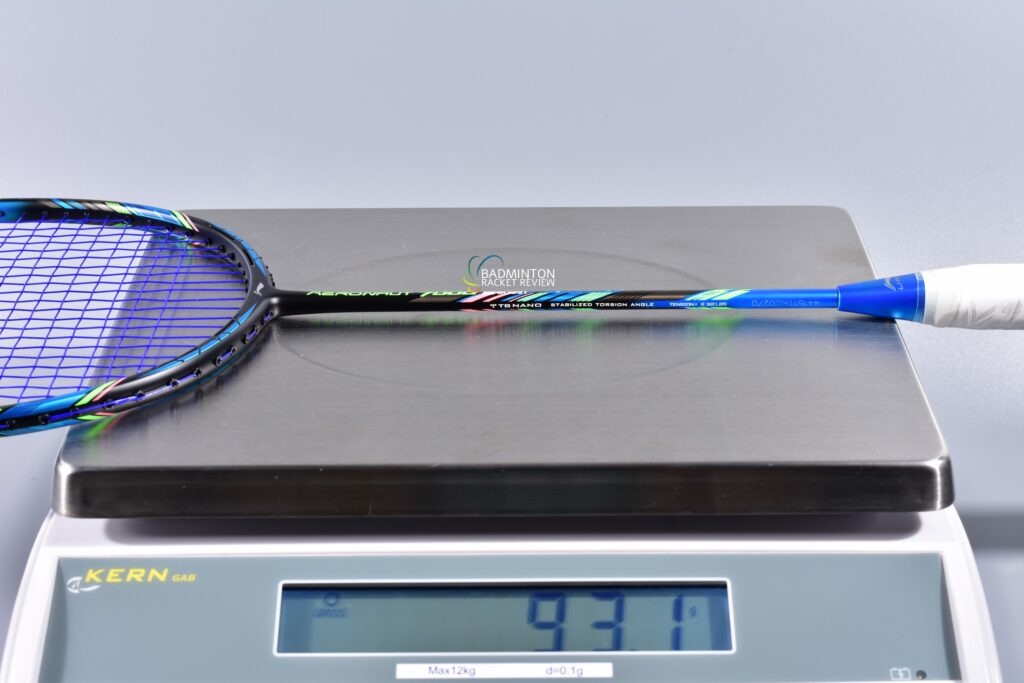
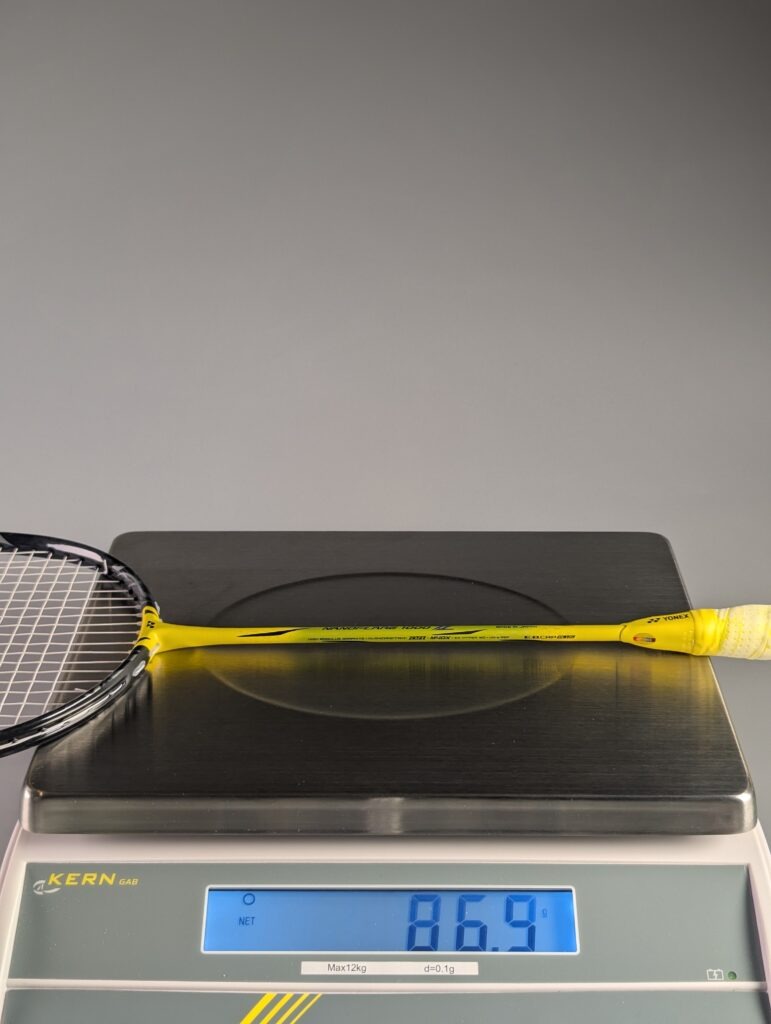
A 5 g range is a lot in badminton. A racket at the heavy end of 4U can feel closer to a 3U than to a 4U at the light end. That is why we weigh every racket ourselves, strung, to 0.1 g, instead of relying on the label.
3U vs 4U: what changes on court?
- 3U (heavier): more stable on off-centre hits and more momentum for smashes and clears, but slower in defence and more tiring to use.
- 4U (lighter): quicker to manoeuvre in drives and defence and easier on the arm, but you have to work harder for power.
4U is a popular choice among club players, while strong singles players and hard hitters often prefer 3U. Many models are made in both weights, so you can choose the same frame in the weight that suits you.
Weight and swing weight are not the same
A racket’s weight on a scale is only part of the story. Swing weight combines weight with balance, so a head-heavy 4U racket can have a higher swing weight than an evenly balanced 3U. To find out how heavy a racket will feel in play, compare swing weights. We measure swing weight on an Accuswing 2 machine for every review.
Which weight should you choose?
- Beginners and juniors: 4U or 5U, with a head-light or even balance.
- Club doubles players: 4U is a popular choice.
- Singles and hard hitters: 3U, or a 4U with a high swing weight.
- Players with arm or shoulder problems: a lighter racket with a low swing weight.
See the measured weights in our Yonex Nanoflare 1000 Pro 4U review and Li-Ning Aeronaut 7000 review.
Since 2014, every racket we review has been measured the same way by the same player. Browse our 800+ lab-tested racket reviews, or read how we test badminton rackets.
Leave a Reply
You must be logged in to post a comment.