
Ask club players what makes a racket feel powerful or fast, and the answer usually comes down to balance. Balance tells you where the weight sits along the racket, and it changes how a racket feels more than almost any other figure on the spec sheet. Here is what head-heavy, head-light and even balance mean, and how to choose the right one for your game.
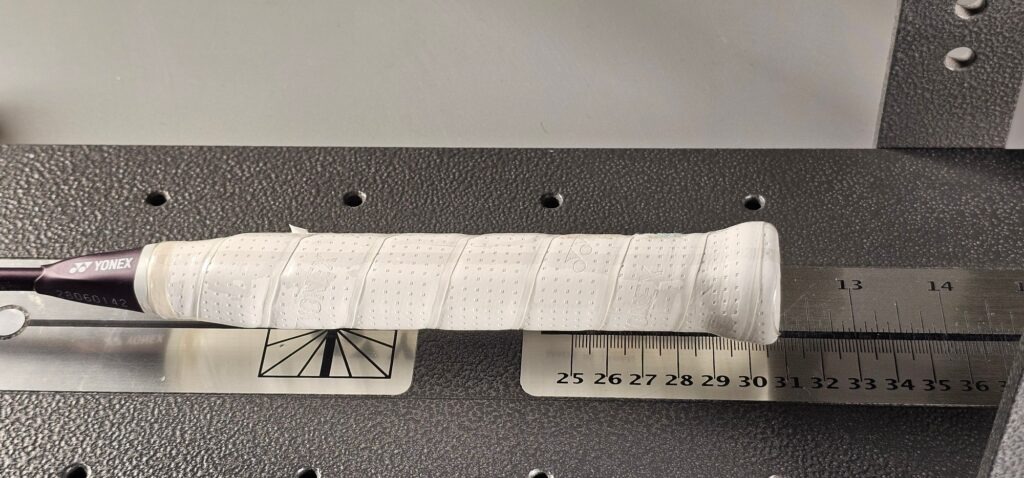
What is the balance point?
The balance point is the place where the racket would balance on your finger, measured from the end of the handle. On most badminton rackets it is close to the middle. If it is further towards the head, the racket is head-heavy; if it is closer to the handle, the racket is head-light; and if it is roughly in the middle, the racket has an even balance.
A few millimetres make a noticeable difference, so we measure the balance point of every racket we test instead of relying on the label. Two rackets sold as head-heavy can feel quite different on court.
Head-heavy rackets: power from the back of the court
- Feel: more of the weight is in the head, so the racket carries more momentum through the swing.
- Strengths: heavier smashes, and clears that reach the back of the court more easily.
- Drawbacks: slower to recover in defence and in fast drive exchanges, and more tiring over a long match.
- Best for: singles players, and doubles players who like to attack from the back of the court.
Head-light rackets: speed at the net and in defence
- Feel: more of the weight is near your hand, so the racket is quick to move.
- Strengths: fast reactions in defence, at the net and in flat drives, with less strain on the wrist and shoulder.
- Drawbacks: you have to generate more of the power yourself on smashes and clears.
- Best for: front-court doubles players, defensive players and many beginners.
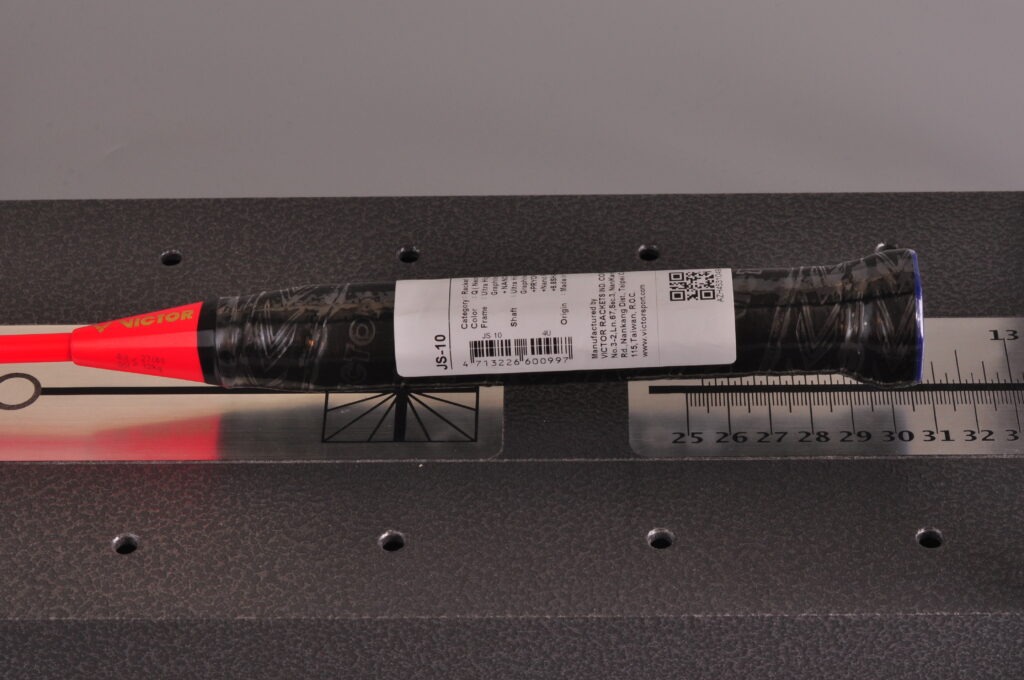
Even balance: the all-rounder
Even-balanced rackets sit between the two. They will not give you the heaviest smash or the fastest defence, but they do everything well. If you play both singles and doubles, or you are not yet sure what kind of player you are, an even balance is a safe place to start.
Balance is only half the story: check swing weight too
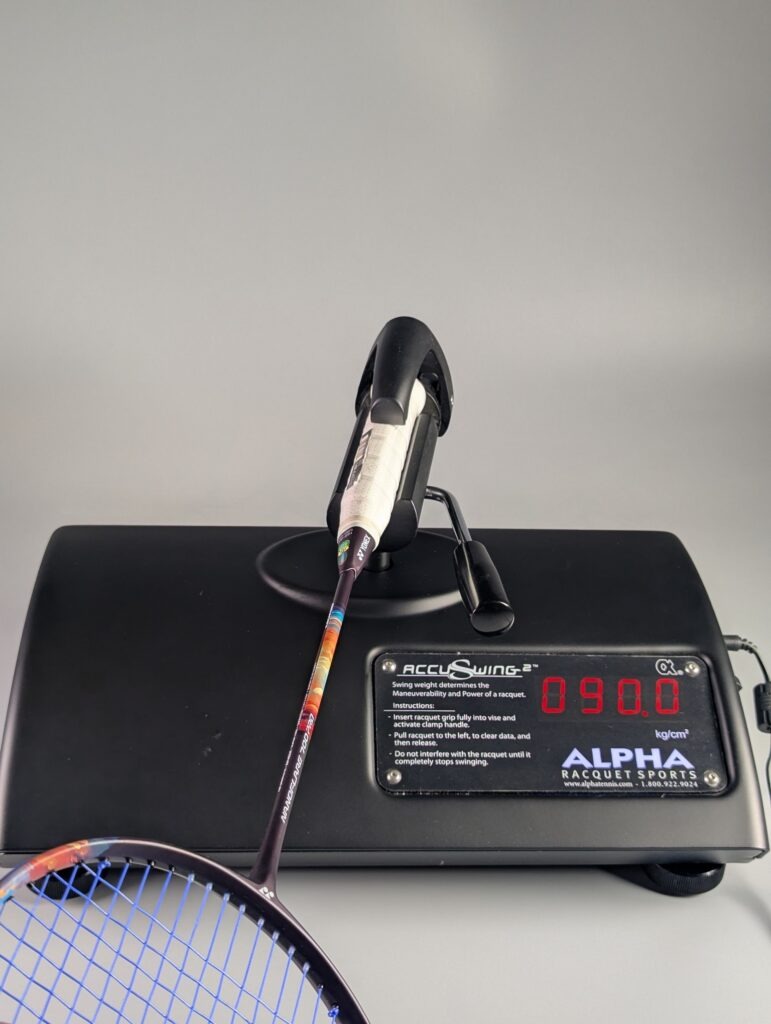
Balance tells you where the weight is. Swing weight tells you how heavy the racket actually feels when you swing it, because it combines weight and balance in a single figure. A light, head-heavy racket can still be easier to swing than a heavier racket with an even balance. That is why we measure both.
Quick guide: which balance should you choose?
- If you smash a lot and play from the back of the court, choose head-heavy.
- If you play at the front in doubles, or like to defend and counter-attack, choose head-light.
- If you play a bit of everything, or are still learning, choose even balance.
- If you have wrist, elbow or shoulder problems, lean towards a head-light racket with a lower swing weight.
To see real figures, read our Yonex Nanoflare 700 Pro review and our Yonex Arcsaber 11 Pro review.
Since 2014, every racket we review has been measured the same way by the same player. Browse our 800+ lab-tested racket reviews, or read how we test badminton rackets.
Leave a Reply
You must be logged in to post a comment.